- Can the trailer stay through several construction phases?
- Yes, if its access and utilities remain workable. Mark the later fencing and material-storage areas now. Include any planned relocation in the operating budget and confirm the new pad before moving the unit.
- Where should the trailer go on an active construction site?
- Somewhere that stays level, reachable and out of crane and material routes for the whole project, with a short route for crews and space for the pump truck to return on schedule. Plan a relocation step if the site phases will move it.
- Should I buy for seasonal use or year-round use?
- Decide before you choose the unit. Seasonal use (spring through fall) works with any listed configuration if the trailer is drained and stored for winter. Year-round use needs cabin heating plus documented cold-weather capability for the exact unit, and a plan for power interruptions. Cabin heating warms the room; it does not protect tanks, pumps or water lines from freezing.
- Which configuration fits a renovation in an occupied building?
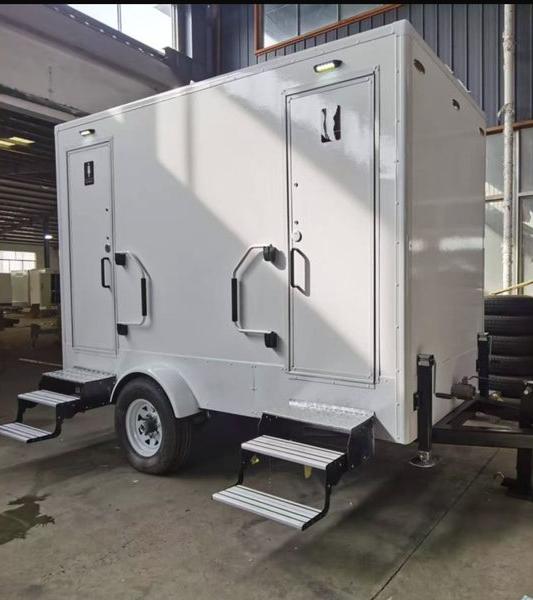
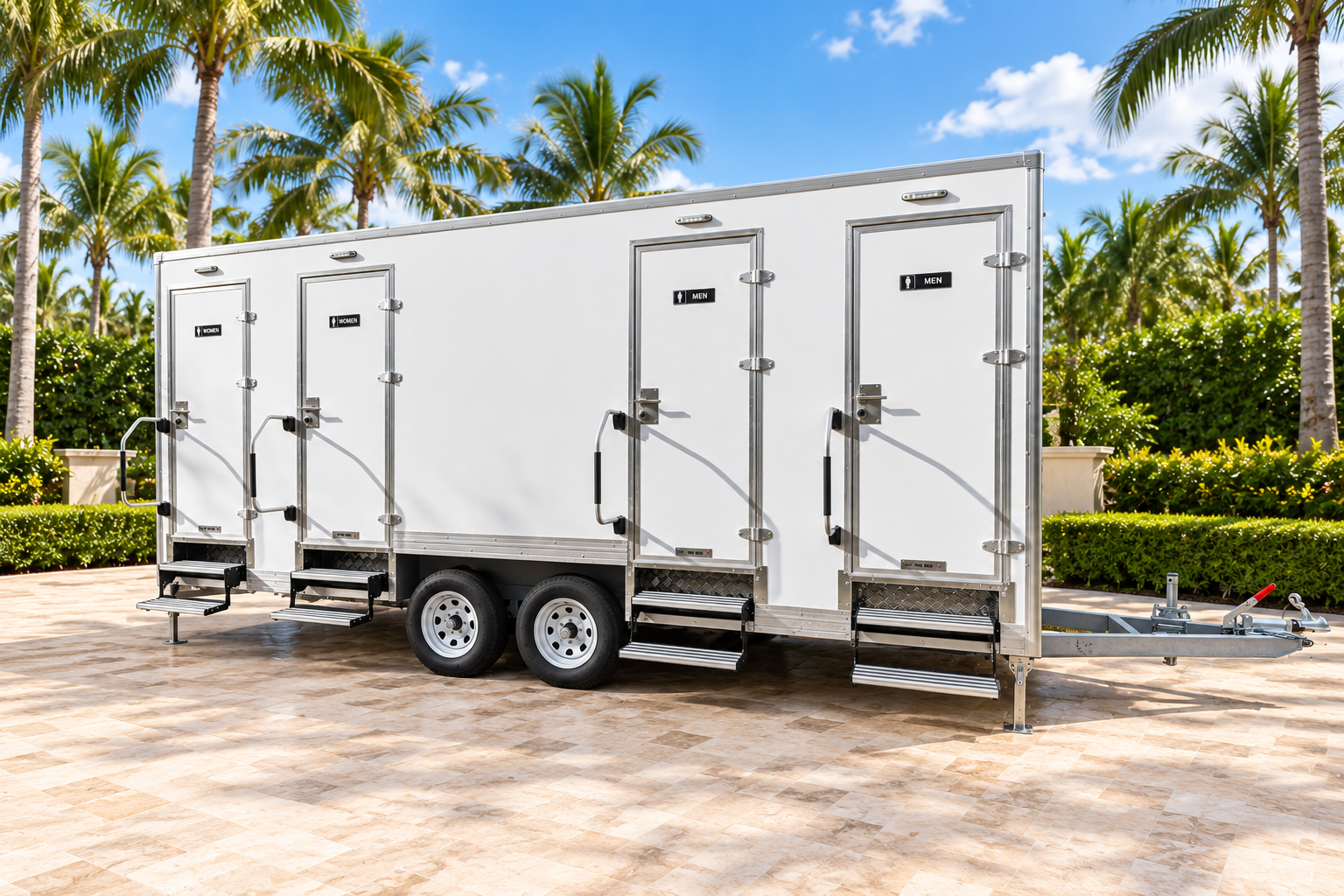
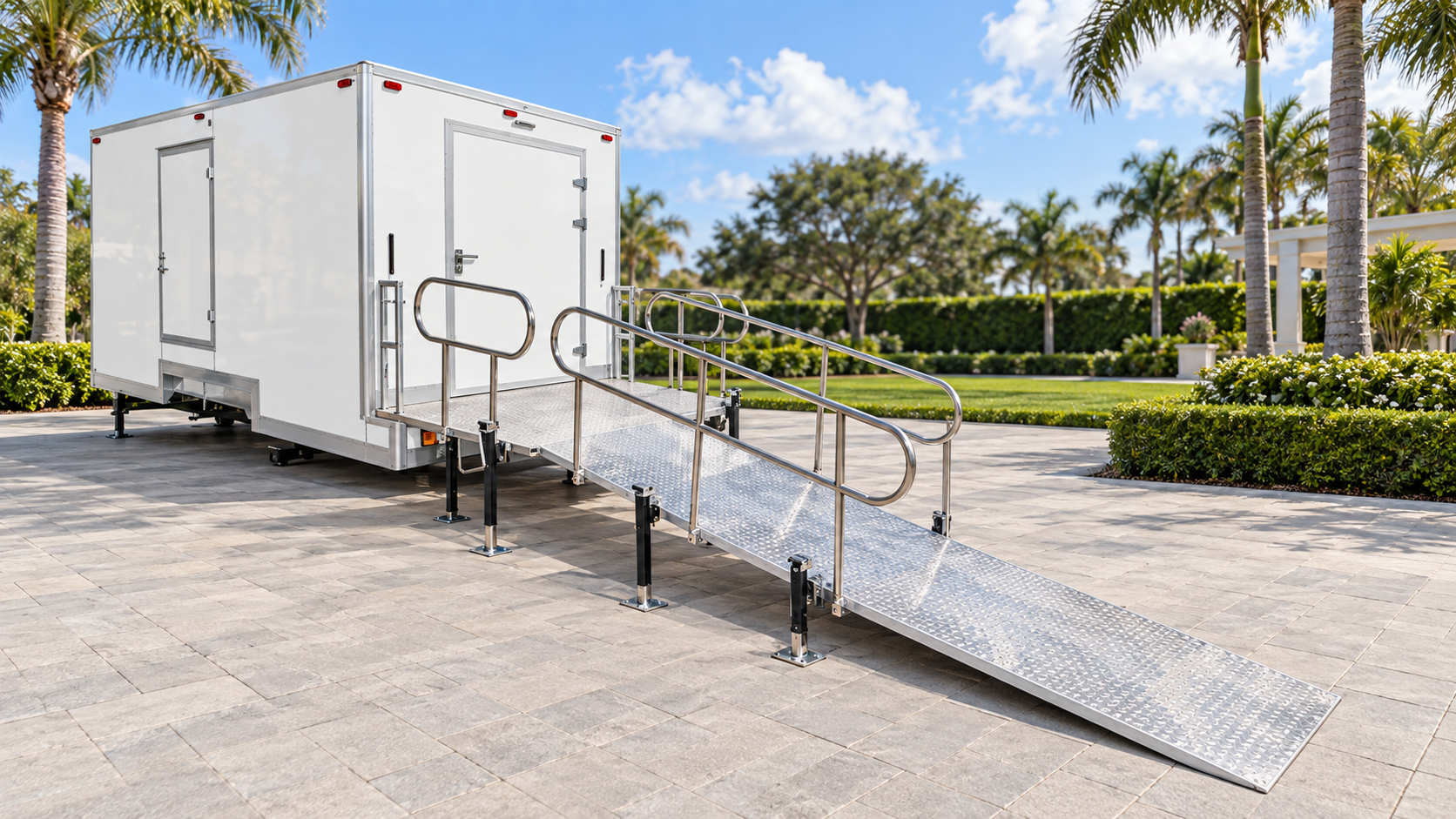
- Count the people who will lose access to building restrooms at the busiest moment of the closure. Compartment count alone is not a capacity rating: compare the 2-Stall and 4-Stall against your expected peak use; the Wheelchair Accessible + 2-Stall adds a ramped accessible suite where the public or staff need one. Showers are usually unnecessary, so ask about a restroom-only unit if no one will shower.
- How do I measure the space the trailer needs?
- Measure the deployed footprint, not just the trailer body: the body and towbar, the steps and landings at every door, the ramp and its landing for the wheelchair-accessible configuration (the provided ramp is about 16 ft at a 1:12 slope), clearance for doors to open, and a lane for the pump truck to reach the service connections. Confirm exact dimensions for the unit you choose on the quote.
- What if the site has no suitable outlet or water connection?
- Each unit needs a standard grounded three-prong plug on a dedicated 20-amp circuit; where none exists, a generator works. A quiet inverter generator providing at least 4,000 running watts and 5,000 starting watts is our recommended baseline for the 2-stall, 4-stall and 2-stall plus wheelchair-accessible configurations. Water comes from the onboard tank filled from a potable source or from a potable hose. Arrange potable refills and waste pumping with a local provider before delivery; All Pro does not operate a service network outside Southwest Florida.
- Who confirms placement requirements for a Birmingham parcel?
- The office that controls the parcel, which is not always the one on the mailing address. Vehicle title and registration offices do not approve where a trailer sits. Start with the placement authority described on this page and the property owner or operator, and ask about trailer placement, generator use, the accessible route and waste servicing for your actual site and duration.
- Can I rent instead of buying?
- Not here. Our rental fleet serves Southwest Florida only; elsewhere All Pro sells trailers with delivery quoted by ZIP.